Not Only For Ourselves
Excerpts from my new book on the history of the Jewish Council for Racial Equality; a British body formed in the 1970s to support refugees and campaign against racism

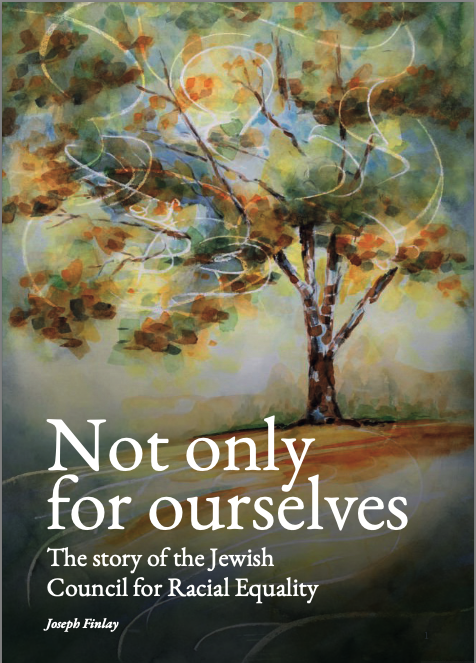
Not Only for Ourselves
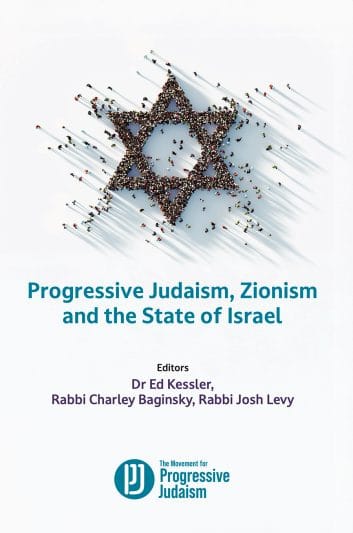
I've recently published a short book, entitled Not Only for Ourselves: The Story of the Jewish Council for Racial Equality. It's a history of a British Jewish organisation, one founded by Edie Friedman in 1976 and now merged with the US-based Hebrew Immigration Aid Society (HIAS) to form HIAS+JCORE. You can buy the book exclusively from HIAS+JCORE here. Please do - I'd love as many people to read it as possible. The book followed on from my doctoral research on British Jews and race relations, and was based on interviews and archive research. Below I share some excerpts from it, taken from the introduction and first chapter.
We launched the book on June 17th at JW3, with a discussion on historic and contemporary racism and anti-racism in Britain, with me, Edie Friedman, Dawn Butler MP and Leroy Logan MBE, chaired by the current HIAS+JCORE director Rabbi David Mason. The other speakers were on their best behaviour, talking of the need for multi-racial, multi-religious coalitions against racism, so it fell to me to point out some of the challenges to building such coalitions, then and now, and some of the internal division in the anti-racist world. It seems to me that HIAS+JCORE's current focus is almost entirely on refugee advocacy and welfare work, and while this is laudable, it does leave a gap in the Jewish anti-racism field. As we have seen in recent times, a body which combats both antisemitism and racism more generally at the same time, and understands the links between them, is sorely needed. For many years JCORE filled that gap; if it is not doing so today then something needs to replace it.
Excerpts
This is a book about one small organisation, but one that tells a wider story. It is concerned with how and when the British Jewish community intervened in the field of race relations in the post-WW2 period, and how it engaged in issues of immigration and social responsibility more broadly.
It is specifically a postwar story. In the 1930s, after Hitler’s ascension to power and the subsequent Jewish refugee crisis, Jews themselves were the subject of controversy in Britain, with a rise in fascist antisemitism, renewed societal concern over the ‘Jewish question’ and strict limits placed on Jewish immigration into Britain and her colonies. The situation continued during the war years, when there was concern that the war should not be perceived as being fought on behalf of Jews, and in the immediate postwar years, which saw antisemitic riots in many cities and a resurgence of fascism. But the situation changed by the start of the 1950s once migrants from the Caribbean and the Indian subcontinent began to arrive in significant numbers. New fears centred around Black and Asian migration arose, over whether it signalled ‘reverse colonisation’ as imperial diehards saw it, or simply that Britain was becoming a multi-racial nation. At the same time, Jews ceased to be viewed as an immigrant group and quietly assimilated into whiteness, with little attention paid to the small number of recently arrived Jews from India and the Middle East. The latter shift depended on the former; who had time to worry about Jews when there were new migrants to be afraid of?
In this changed reality new ‘race relations’ bodies sprang up, predominantly populated by white liberals, working within the prism that relations between groups needed careful management to ensure social cohesion. There were some Jews on these bodies, but most Jews and Jewish organisations chose to stay out of race relations work in the 1950s and early 1960s. Even where there was lingering discrimination against Jews – such as in hotels and private clubs – few in the Jewish community campaigned for anti- discrimination legislation. This changed after Colin Jordan’s neo-fascist National Socialist Movement succeeded in holding a rally in Trafalgar Square in 1962, with the slogan ‘Free Britain from Jewish Control’. Shock that the authorities had been unable or unwilling to prevent the rally occurring led to a new Jewish communal interest in anti-fascist legislation, which was eventually combined with anti-discrimination measures in the Race Relations Act of 1965. Outside a small number of Jewish radical lawyers who helped write the act and its successors, such as Anthony Lester and Geoffrey Bindman, most Jews continued to avoid race relations work, perhaps fearing renewed racialisation were they to do so.
In the lead-up to the Second Reading of the 1968 Race Relations Act, which tightened anti-discrimination provisions, Enoch Powell made his infamous ‘Rivers of Blood’ speech in Birmingham, demanding the right to continue to discriminate against Black and Asian Britons. The speech and the controversy that followed kickstarted a range of Jewish race relations initiatives. First, the Reform Synagogues of Great Britain (RSGB) passed a resolution at their annual conference, urging synagogues to involve themselves in race relations work, accompanied by a stirring sermon by Rabbi Dow Marmur. Secondly, recently appointed Chief Rabbi Immanuel Jakobovits organised a one-day conference on how Jews should respond to race relations, inviting a range of Jewish academics, lawyers and broader communal figures such as the MP Maurice Orbach, the social psychologist Hilde Himmelweit and the dramatist Wolf Mankowitz. Finally, the Board of Deputies took up the initiative and sent out questionnaires to synagogues and Jewish institutions asking them what they did in the field of race relations. Few questionnaires were returned and of those that were, the answer was generally ‘not much’. Undeterred, the Board, under the leadership of Samuel Fisher, published the short report Improving Race Relations– A Jewish Contribution, which set out to examine ‘the most appropriate means for the Anglo-Jewish community to assist in the integration of the coloured people in this country, to improve race relations, and to report and recommend accordingly.’ While it was, in the words of Fisher, ‘the first time the Board had taken a stand on the problems of another minority’, the report was not particularly detailed and made little impact. The organised Jewish community had taken some initial steps in race relations, but for most British Jews the field remained seen as someone else’s affair.
There were some further progressive steps in the early 1970s, with some prominent Jews joining local race relations councils, and a spirited communal campaign against the Heath government’s Commonwealth Immigrants Act in 1971, which accused the Government of introducing racial discrimination into its immigration.
A small number of Jews active in anti- fascism engaged in more militant forms of anti-racism, such as the Searchlight journalist Gerry Gable. And a few Jewish writers such as Emmanuel Litvinoff and C.P. Taylor addressed issues of race, racism and Jews in their work. But by and large the British Jewish community remained on the sidelines of race relations and anti-racism. It preferred to portray itself as a religious denomination rather than an ethnic group and stay out of anything ‘political’. This is the world an idealistic Jewish student from Chicago would discover when she arrived in the early 1970s. After that point the wider community would gradually dip its toes into the world of anti-racism and pro-migration campaigning, with moments of greater and lesser engagement. But these were never communal priorities, in that way that anti-antisemitism and Israel advocacy were, and for most of JCORE's almost fifty-year history it was almost alone in advocating for the importance of such work within the Jewish community. Others have only recently begun to catch up.
After settling permanently in the UK in 1971, Edie Friedman began work for Oxfam. She remained with the organisation for three years and thus became deeply involved in the work of campaigning against international poverty, and advocacy on behalf of what was then labelled the ‘Third World’, countries in neither the NATO nor Soviet camps. Attending Sinai Synagogue, Leeds’ Reform congregation (another difference from the US was the far smaller size of Reform Judaism in the UK), she once organised an after-dinner talk with senior Oxfam leaders at the synagogue. It proved disastrous – the speakers made unwise comparisons between Israeli treatment of Palestinians and Nazis and community members claimed that Oxfam ‘supported the Arabs’. Friedman recalled being told that ‘People like you destroy Judaism’ – and responded by saying ‘I’m only 21 years old’. The occasion represented early evidence that Jewish involvement in global social responsibility work would come up against the wall of the Israeli-Palestinian conflict, and of the vitriol people doing such work could expect to receive.
In a story that Friedman would often tell, she was inspired by a Jewish friend who said to her ‘I’m glad you do the Christian thing of loving your neighbour’. Friedman felt strongly that social justice was a Jewish value, and not one that could uniquely be claimed by Christians. Friedman sought out other Jews who might be interested in working with her on projects which supported migrant communities in the UK. These were often found outside or on the margins of the ‘mainstream community’ – some at the University of Leeds, amongst the many secular Jewish academics, some at interfaith gatherings, which, ironically, Friedman attended to seek out potential Jewish collaborators. She discovered others on the Community Relations Councils, those bodies which had emerged in the wake of the Race Relations Act of 1968, expanded in the Act of 1976.
Through the world of interfaith dialogue Friedman also met Christians who were deeply involved in social justice and anti- poverty work, amongst them Anne Forbes, then chair of the Catholic Commission for Justice and Peace and Bob Dixon from the World Development Movement. Dixon was impressed by Edie’s aim to create some kind of Jewish social justice organisation, which would be a first for the UK, and gave her £50 to travel to London and hold meetings with people of influence. Friedman largely met MPs and rabbis; she targeted especially the then 45 Jewish MPs, of whom 36 were Labour, including the great Jewish Labour rivals Greville Janner and Eric Moonman. Of the rabbis she met, one of the most significant was Hugo Gryn, the Auschwitz survivor and rabbi of the West London Synagogue, who would go on to be one of her biggest rabbinic supporters and JCORE’s first president. She also met the property developer Godfrey Bradman, who would become a major donor for her projects. Friedman made an impact in these encounters by being so different to those she was meeting – she was young, in her mid-twenties, female and American in contrast to a Jewish communal and political leadership that was overwhelmingly male, middle-aged and British-born. Friedman’s novelty and confidence helped her gain access to people that others would not have been able to reach.
Having held these meetings Friedman was now well placed to formally constitute an organisation, the Jewish Social Responsibility Council (JSRC), which she founded in Leeds in 1976. The name was modelled on a Catholic Social Responsibility Council with which Friedman’s interfaith contacts were involved. The JSRC quickly gained a range of well-known names as honorary vice- presidents, such as Labour MP Greville Janner, the Zionist Federation’s Chairman Sidney Shipton and cultural figures Jonathan Miller and Arnold Wesker.
The new group created a Manchester branch in addition to the Leeds one, and an early report in the Jewish Chronicle suggested that the Leeds group would focus on ‘the problems of the developing Asian countries in the Third World’ asking “Do we, as Jews, have a contribution to make in the redressing of the imbalance between rich and poor?"’ while the Manchester group would consider ‘the problems of race relations’ and ‘How best to deal with groups such as the National Front, and how best the Jewish community can give assistance to other groups which are attacked by them.’
The focus on Third World poverty, and international inequality grew organically from Friedman’s work with Oxfam but proved too large an issue for the fledging organisation to make serious inroads into. It would be the work of race relations, or community relations as it would later become rebranded, where the JSRC would do most of its work. It focused on building bridges between British Jews and other communities; particularly African Caribbean and Southeast Asian communities. On top of this it would do some of its most important work providing welfare to recently arrived immigrants. This was an area which sat well with the wider British Jewish community; while many were not yet comfortable identifying themselves as an ethnic minority, being styled as a community of immigrants was less objectionable and served as a means for Jews to express solidarity with more recent immigrants to the UK.
The flagship early event, which put the JSRC on the map, nationally as well as locally was a 1978 West Indian-Jewish cultural evening, with Jewish choirs, steel bands and Caribbean dancers. It attracted 500-600 attendees, with around half coming from each of the two communities. Anthony Levine, President of the Leeds Jewish Representative Council described the event as ‘a phenomenal success... beyond everyone's wildest dreams’. Canon Howard Hammerton, the vicar of Holy Trinity Leeds commented that ‘Leeds had never seen anything like it. It was a moving experience to see the Jewish community in great numbers, and representing every aspect of the life of our city, holding out the hand of fellowship to the West Indians.’
Multiple local rabbis attended, alongside Martin Savitt of the Board of Deputies’ Defence Division (which had recently added ‘Group Relations’ to its title) and Sebastian Charles, a West Indian communal leader. A second event in 1979 was even more successful, with around a thousand attendees, featuring performances by the Leeds Jewish Choral Society, the Morris Silman Middle School Choir, Chapeltown Dance Theatre and Gospel Messenger and comedy from the Black British comedian and former footballer Charlie Williams. Orthodox and Reform rabbis spoke, alongside Abdul Ali, regular MC of the Leeds West Indian Carnival. Labour MP Eric Moonman, then head of the Group Relations Educational Trust, emphasised the importance of the Leeds location, calling it ‘the only place in the country where such an event would be so well supported so as to promote positive race relations.’ These evenings, of which another was held in November 1980, proved to be the biggest public events the JSRC ever organised, and a strong sign of the relevance of its work and the strong connections it had built in Leeds.
Times were changing - the ‘new-right’ associated with the Centre for Policy Studies was growing in ascendancy, and the late 1970s would in retrospect turn out to be a high point of the kind liberal race relations work in which the JSRC was beginning to take a lead. Its vision of social justice was very much tied to the Labour and Liberal parties; indeed in 1977 James Callaghan had become the first serving prime minister to address the Board of Deputies and had used his speech to ask the Jewish community specifically to reflect on ‘the kind of society Britain should be; how we should try to shape it; what laws should it have; what challenges and inspirations should we offer to a new generation.’
May 1979, however, saw the victory of Margaret Thatcher’s Conservatives, bolstered by an intellectual agenda which sought to replace what it saw as woolly liberalism with a hard-nosed monetarist economic agenda, combined with a return to ‘Victorian values’. This would prove a very different climate for the JSRC to operate within, and a change of location would add to the set of new challenges the organisation faced as it entered the 1980s. Still, the JSRC entered the new era in a confident mood. In a promotional leaflet which laid out ‘a programme for the ‘80s’ and sought new members, the JSRC declared:
In Britain today the Jews have left their ghettos, they are no longer refugees. Though they remain vulnerable they are rarely openly attacked, but there are new scapegoats, new ghettos, new victims of racial violence and, worldwide, a new generation of poor and oppressed people. The Jewish Social Responsibility Council links the Jewish community with other minorities in Britain, and with the developing world. Join us.